Literary Lineage

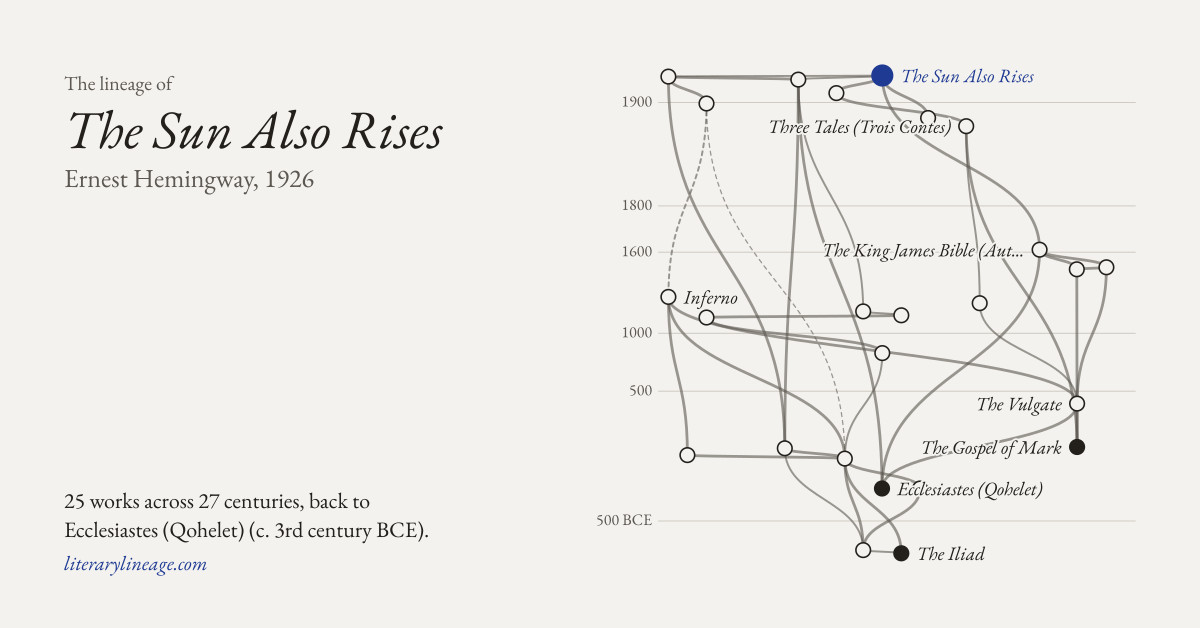
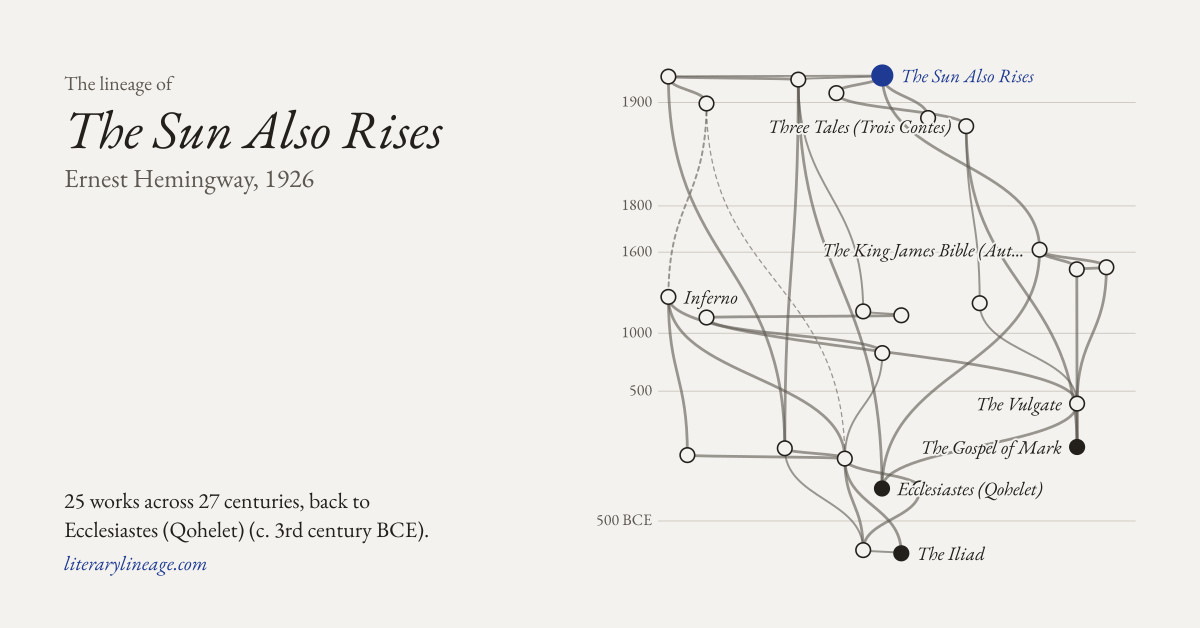
The lineage of The Sun Also Rises

25 works across 27 centuries, back to Ecclesiastes (Qohelet) and The Gospel of Mark.

  1. 19 BCE

    The Aeneid

    Virgil

    Augustan. Augustan Rome. written in Latin.

    Virgil's epic of the Trojan Aeneas's flight from burning Troy, his love affair with Dido, his descent to the underworld and his war in Italy.

    What it handed down

    To Heart of Darkness (1899)

    Disputed link, conjectural.

    Some critics have read Marlow's journey upriver as a descent to the underworld on the model of Aeneas's in Aeneid Book 6, with the knitting women at the Company office as guardians of the threshold. Conrad left no statement confirming the parallel.

    To Inferno (c. 1314)

    Direct source, well documented.

    Dante makes Virgil his guide through Hell and calls him his master and author. Charon, the river crossings and the geography of the dead come from Aeneas's descent in Aeneid Book 6.

    To Historia Brittonum (c. 829)

    Thematic kinship, probable.

    The Historia Brittonum makes Brutus a descendant of Aeneas and links British origins to the Trojan diaspora that Virgil's epic made famous. The Trojan genealogy borrows its authority from the Aeneid's story of Rome's founding.

    To Satyricon (c. 60 CE)

    Direct source, well documented.

    The poet Eumolpus recites the 'Troiae Halosis', a verse account of the fall of Troy that reworks Aeneid Book 2. Petronius uses Virgil's epic material for comic and critical effect in a low setting.

    To Metamorphoses (8 CE)

    Direct source, well documented.

    Books 13 and 14 of the Metamorphoses retell Aeneas's voyage from Troy to Italy, a compressed 'little Aeneid' in which Ovid passes quickly over Virgil's set pieces. Ovid's epic is written in deliberate competition with Virgil's.

    Where it came from

    Find “The Aeneid” on Amazon

Share this lineage

Preview card: the tree of influence behind The Sun Also Rises