Literary Lineage

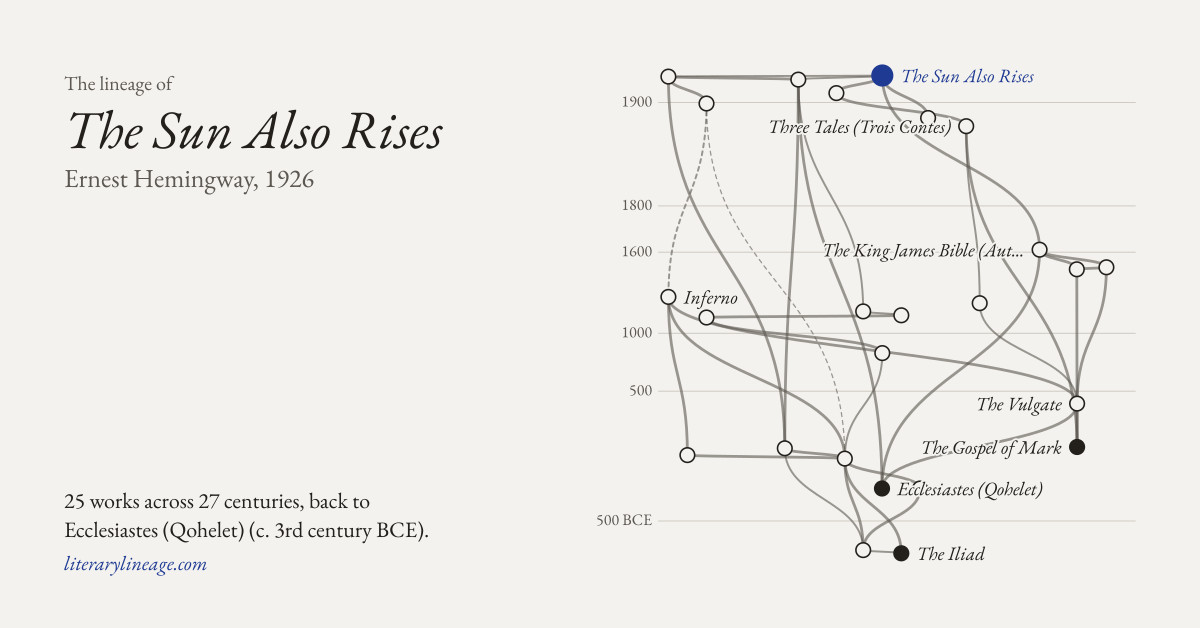
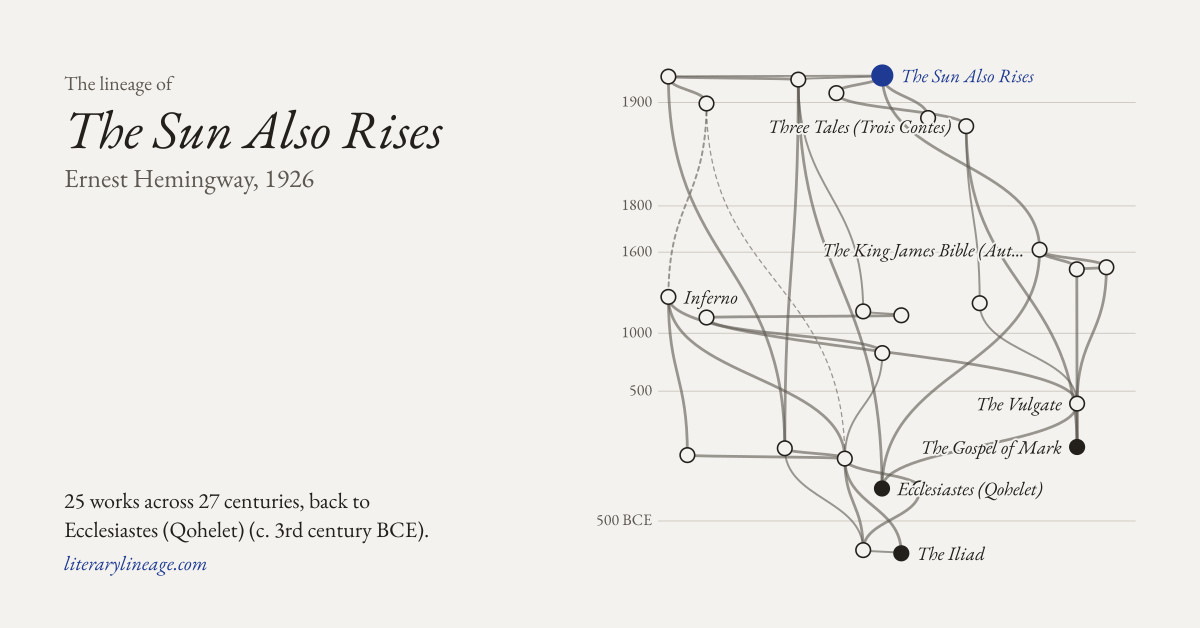
The lineage of The Sun Also Rises

25 works across 27 centuries, back to Ecclesiastes (Qohelet) and The Gospel of Mark.

Following one thread, 3 works from The Sun Also Rises to Ecclesiastes (Qohelet). Back to all 25 works

  1. c. 3rd century BCE

    Ecclesiastes (Qohelet)

    Anonymous (attributed to Solomon)

    Persian or Hellenistic period. Judea. written in Hebrew.

    A book of Hebrew wisdom literature in which the Preacher reflects on the vanity of human effort against the endless cycles of nature.

    What it handed down

    To The Waste Land

    Direct source, well documented.

    Eliot's note to line 23 ('the cricket no relief') directs readers to Ecclesiastes 12:5, the Preacher's picture of old age when 'the grasshopper shall be a burden'. The poem's dry stones and absent water echo that chapter's imagery of decay.

    To The King James Bible (Authorized Version) (1611)

    Direct source, well documented.

    The King James translators rendered Ecclesiastes from the Hebrew Masoretic text, producing the verses about the sun rising and the generations passing that Hemingway quoted. Their English kept the parallel, repetitive structure of the Hebrew.

    To The Vulgate

    Direct source, well documented.

    Jerome translated Ecclesiastes directly from Hebrew around 398 and had earlier written a commentary on it. His Latin version became the text through which the medieval West knew the book.

    Where it came from

    This is one of the oldest surviving works in its tradition; the line ends here.

    Find “Ecclesiastes (Qohelet)” on Amazon

Share this lineage

Preview card: the tree of influence behind The Sun Also Rises