1869
A Sentimental Education (L'Éducation sentimentale)
Gustave Flaubert
Second Empire. France. written in French.
Flaubert's 1869 novel follows Frédéric Moreau from 1840 through the 1848 Revolution and the coup of 1851, as his lifelong unconsummated love for Madame Arnoux and his drifting ambitions come to nothing. It turns the novel of a young man's education into a study of illusion, inertia and failure.
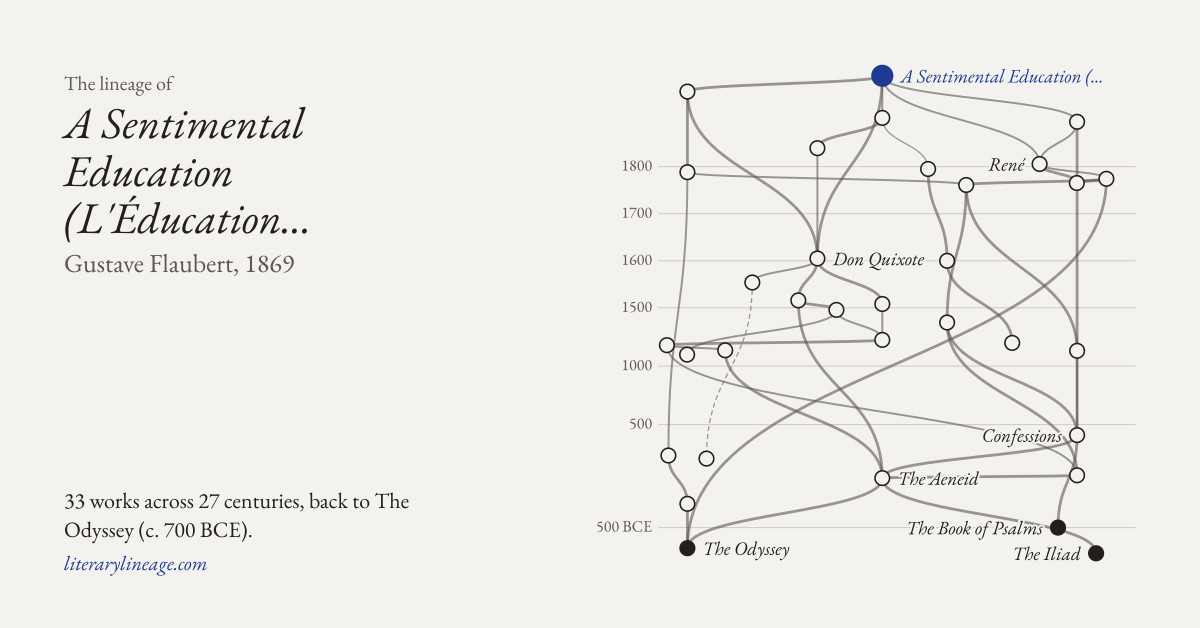
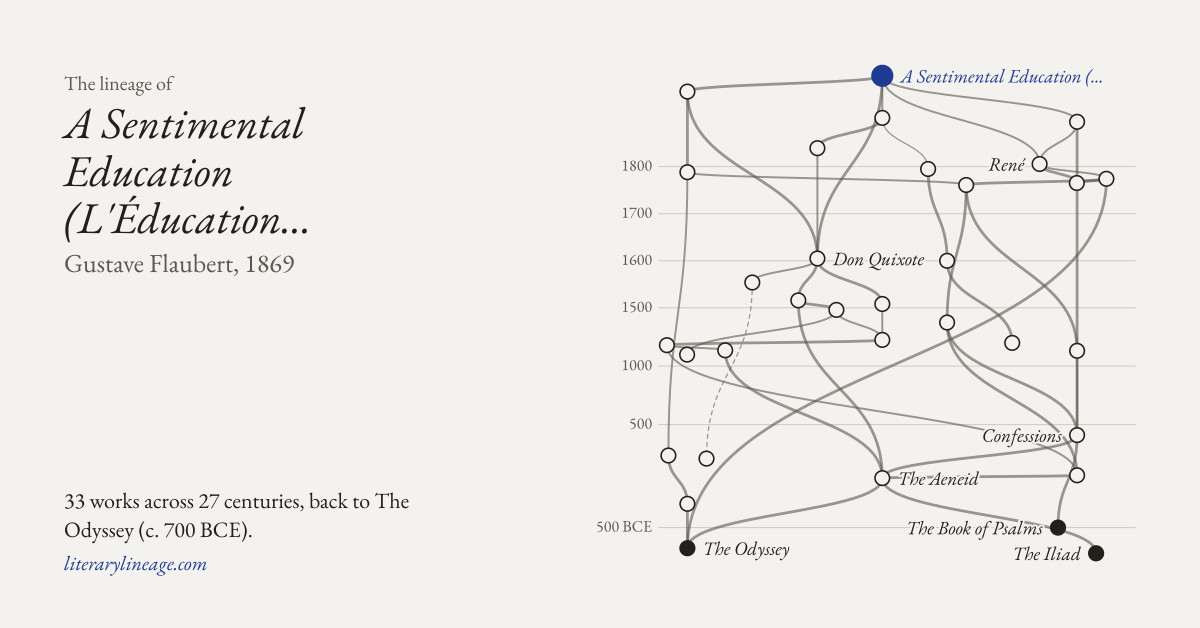
Where it came from
- Madame Bovary, Gustave Flaubert 1857 follow this thread
- Don Quixote, Miguel de Cervantes 1605–1615 follow this thread
- Lost Illusions (Illusions perdues), Honoré de Balzac 1837–1843 follow this thread
- Volupté, Charles-Augustin Sainte-Beuve 1834 follow this thread
- René, François-René de Chateaubriand 1802 follow this thread
Find “A Sentimental Education (L'Éducation sentimentale)” on Amazon